Philosophy without practice is just entertainment.
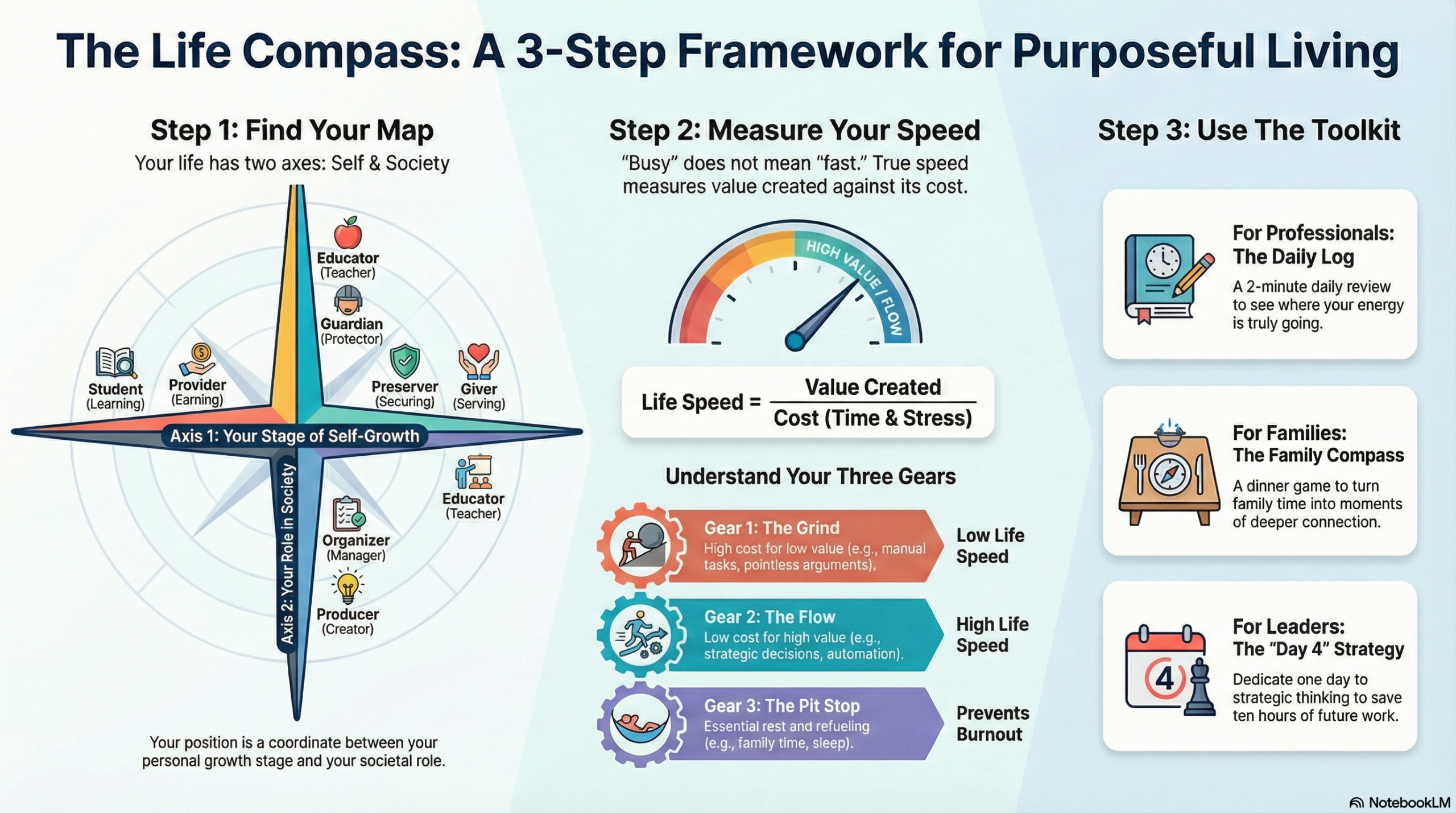
Over the last two weeks, we explored the Life Compass Map (Part 1) and the Physics of Life Speed (Part 2). Now, we hand you the tools to navigate.
Here are three templates designed for different aspects of your life. You don’t need an app or a spreadsheet. A simple notebook or the back of an envelope is enough.
Tool 1: The Professional’s Daily Log
For the career-focused individual who wants to escape “The Grind.”
At the end of your workday, take 2 minutes to fill out this simple table. It acts as a mirror, showing you where your energy is actually going.
How to use it:
Role: Were you a Producer (Doing), Organizer (Managing), or Student (Learning)?
Intensity: Score your focus from 1-10.
The Insight: If you see a week full of “Score 3” (Low Intensity), you are drifting. If you see 100% “Organizer” roles and 0% “Student,” you are burning out. Schedule time to learn.
Tool 2: The Family Compass
For turning vacations and weekends into deep connection.
Family trips often become stressful because we focus on logistics (tickets, food, traffic) rather than roles. Use this game at the dinner table.
The Dinner Table Game:
Ask each person: “What role did you play today?”
The Explorer: Did you find a new path or a new restaurant?
The Builder: Did you build a sandcastle or a plan?
The Peacemaker: Did you solve a problem between siblings?
The Guide: Did you teach us something new?
Why it works: It teaches children (and adults) that their value isn’t just “being there”—it’s about how they contribute to the group’s happiness.
Tool 3: The “Day 4” Strategy
For Leaders and Entrepreneurs.
If you are leading a project or a business, you cannot run at full speed every day. You need a Strategic Pause. We call this the “Day 4” rule (based on a 5-day work week).
The Protocol:
Dedicate one day (or half a day) exclusively to Design, Not Doing.
The “Anti-Scope” List: Write down what you will not do next week.
The One Metric: Identify the single number that defines success.
The Pre-Mortem: Ask, “What is most likely to kill this project?” and solve it before you start.
One hour of thinking on this day saves ten hours of fixing next week.
Final Thoughts
The Life Compass is not about reaching the destination faster. It is about ensuring that the path you are walking is your own.
In Part 1, we learned how to find our coordinates on the map of life. We identified whether we are Learners, Providers, or Givers, and how we contribute to society.
But knowing where you are is only half the battle. The second half is knowing how fast you are moving toward your destination.
In our modern world, we have a dangerous misconception. We believe that Speed = Activity. We think that if we are sweating, stressed, and working 12 hours a day, we must be moving fast.
Physics—and economics—tells us a different story.
The Physics of Life Speed
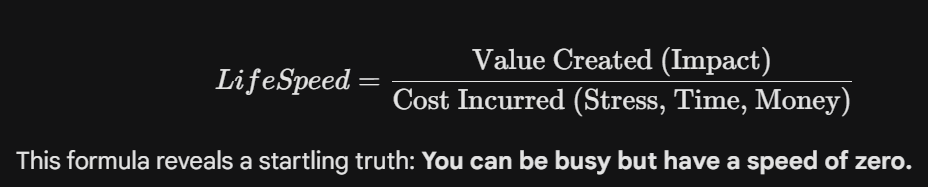
In traditional physics, speed is distance divided by time (1$v = d/t$).2 But in the journey of life, “Time” is actually a Cost. It represents the hours you burn, the stress you endure, and the health you sacrifice.
So, let us rewrite the formula for Life Speed:
This formula reveals a startling truth: You can be busy but have a speed of zero.
Scenario A (The Grind): You work for 10 hours manually copying data into a spreadsheet. You are exhausted.
Value: Low (Data entry).
Cost: High (10 hours + Back pain).
Result:Low Life Speed.
Scenario B (The Leverage): You spend 1 hour writing a script to automate that data entry forever.
Value: High (Permanent solution).
Cost: Low (1 hour).
Result:High Life Speed.
The Three Gears of Your Engine
To master this physics, you must recognize which “Gear” you are driving in each day.
Gear 1: The Grind (Low Speed)
This is when you trade your time directly for money or results, often inefficiently.
Signs: “I have too many emails,” “I am constantly putting out fires,” “I am tired but accomplished nothing.”
The Trap: Staying in this gear makes you feel like a martyr. You feel noble because you are suffering, but you aren’t actually moving the family or business forward.
Gear 2: The Flow (High Speed)
This is High Leverage. It happens when you make decisions, build systems, or deepen relationships.
Signs: “I solved a problem today that won’t come back,” “I had a conversation with my child that changed their perspective,” “I automated a task.”
The Goal: Successful people don’t work more hours; they spend more of their hours in Gear 2.
Gear 3: The Pit Stop (Refuel)
This is where many ambitious people fail. They think resting is “Zero Speed.”
The Truth: If you don’t stop to refuel (Sleep, Family Time, Meditation), your engine breaks. A broken engine has a speed of zero forever.
Action: When you are with family, be 100% there. That is not “lost time”; it is “durability maintenance.”
The Daily Speed Check
Tonight, instead of asking “What did I do today?”, ask yourself: “What was the cost of my progress?”
Did you achieve a small result at a huge emotional cost? (Slow down).
Did you achieve a massive result with a calm mind? (Keep going).
In Part 3, the finale of this series, we will give you the actual Toolkit—three simple templates you can use to track your Purpose and Speed in just 5 minutes a day.
Most of us live life like travelers without a map. We work hard, we study, we earn money, and we take care of our families. Yet, in the quiet moments—perhaps during a morning commute or late at night—we ask ourselves a haunting question:
“Am I in the right place? Am I actually moving forward, or am I just running in circles?”

We often confuse activity with progress. We think being “busy” means we are succeeding. But if you run at full speed on a treadmill, you are busy, yet you haven’t traveled a single inch.
To find your purpose, you don’t need to work harder. You need to know where you are standing. You need a map.
Welcome to The Life Compass.
The Two Axes of Existence
Ancient wisdom and modern economics agree on one thing: Life is an intersection of Time (your personal growth) and Space (your contribution to society).
To build our map, we split life into two simple axes.
Axis 1: Living for Self (The Journey of Time)
This axis represents your internal evolution. It is the chronological timeline of your life, divided into four distinct stages.
The Student (Preparation):
Goal: To Learn.
Focus: You are an “input” machine. You absorb skills, wisdom, and capacity. You are preparing the engine for the road ahead.
The Family Member (Execution):
Goal: To Earn.
Focus: You are the engine. You convert your energy into security for yourself and your dependents. This is the stage of “output” and responsibility.
The Retiree (Transition):
Goal: To Secure.
Focus: You move from accumulation to preservation. You organize your assets so you are not a burden, freeing your mind for higher things.
The Giver (Surrender):
Goal: To Give.
Focus: You detach. Your resources, wisdom, and time flow outward to society without expectation of return.
Axis 2: Living for Others (The Role in Society)
Regardless of your age, you must play a role in the wider world. Society functions because of four specific groups of people.
The Producers (Creators):
These are the hands of society. They build, code, grow food, and create tangible value. Without them, there is nothing to consume.
The Organizers (Merchants):
These are the circulatory system. They connect supply with demand, manage businesses, and ensure wealth flows efficiently.
The Administrators (Guardians):
These are the protectors. They create order, enforce laws, and manage systems so that producers and organizers can work safely.
The Educators (Guides):
These are the intellect. They teach, research, heal, and pass wisdom to the next generation of “Students.”
The Matrix: Where Do You Stand?
When we cross these two axes, we get the Life Matrix. Your “Purpose” at any given moment is simply the coordinate where you currently stand.
Let’s look at two examples:
The “B-2” (Provider-Organizer):
This is the entrepreneur or manager in the prime of their career. They are in the Family Stage (earning for security) and playing the Organizer Role (managing resources).
The Danger: Getting stuck here forever. The “Golden Treadmill” of earning more but never transitioning to giving.
The “A-1” (Student-Producer):
This is the young apprentice or engineering student. They are learning (Student) how to build things (Producer).
The Danger: Impatience. Trying to “Earn” before they have truly “Learned.”
The Diagnostic: Check Your Coordinates
This week, I invite you to stop running for five minutes and check your GPS.
Ask yourself two questions:
Internal Check: Which stage dominates my mindset right now? Am I still learning (Student)? Am I grinding for security (Family)? Or am I ready to share (Giver)?
External Check: How do I contribute to the world? Do I create (Producer), manage (Organizer), protect (Admin), or teach (Educator)?
Write down your coordinate (e.g., “Family-Organizer”).
Once you know where you are, the next question is: How fast are you moving toward the next stage?
In Part 2 of this series, we will discuss the physics of “Life Speed”—and why working 12 hours a day might actually be slowing you down.
Subtitle: A Framework to Measure Purpose, Speed, and Fulfillment in a Modern World.
Part 1: The Map – Finding Your Coordinates
Publish Date: Week 1
Headline: Are You Moving Forward or Just Moving?
The Hook:
Most people live life like a traveler without a map. We work hard, we earn money, we study, but often we feel lost. We ask, “Am I in the right place?” Today, we introduce a simple framework to locate exactly where you are in the journey of life.
1. The Two Axes of Life
Life isn’t a straight line; it’s a grid. To find your purpose, you need to look at two dimensions:
Axis 1: Living for Self (Time): This is your internal journey.
Student: Learning and absorbing.
Provider: Earning and supporting the family.
Preserver: Securing assets and retirement.
Giver: Detaching and serving society.
Axis 2: Living for Others (Space): This is your contribution to society.
Producer: Making things.
Organizer: Managing resources.
Guardian: Protecting order.
Educator: Sharing wisdom.
2. The Life Matrix
(Insert the 4×4 Matrix Diagram here)
When you cross these lines, you find your “Coordinate.”
Are you a Provider-Organizer (B-2)? You are the engine of the economy, but are you burning out?
Are you a Student-Producer (A-1)? You are building the skills to create.
3. The Trap
The danger is getting stuck in one coordinate (like “Provider-Organizer”) forever. The goal of life is to move through the stages—to learn, to earn, to secure, and finally, to give.
Part 2: The Physics – Measuring Your Life Speed
Publish Date: Week 2
Headline: Why “Busy” Does Not Mean “Fast”
The Hook:
We often think “Speed” means doing more things in less time. But in physics—and in life—speed is different. If you run on a treadmill, your speed is 10mph, but your destination is zero.
1. The New Formula
We propose a new way to measure your daily success:
Low Speed (The Grind): High Cost / Low Value. (e.g., Spending 2 hours arguing or doing manual tasks that could be automated).
High Speed (The Flow): Low Cost / High Value. (e.g., Making one strategic decision that saves a week of work, or spending 1 hour mentoring a child that builds a lifetime bond).
Pit Stop (The Refuel): Zero Speed, but essential. (e.g., Rest, Meditation, Family Time).
3. The Daily Check
Don’t ask “How much did I do today?” Ask “What was the cost of my progress?”
If you earned ₹10,000 but destroyed your health, your cost was too high. Your “Life Speed” was actually low.
Part 3: The Toolkit – Templates for Daily Practice
Publish Date: Week 3
Headline: How to Track Your Purpose in 5 Minutes a Day
The Hook:
Philosophy is useless without practice. Here are three simple templates—for students, professionals, and families—to track your Life Compass.
1. The Daily Log (For Professionals)
A simple table to track where your time goes.
Columns: Activity | Role | Intensity (1-10) | Was it Maintenance or Growth?
Goal: To spot if you are “Drifting” (Low Intensity) or “Driving” (High Intensity).
2. The Family Compass (For Vacations)
Turn your family trips into a game.
Ask your kids: “Were you a Maker (Builder) or an Explorer (Finder) today?”
Measure the day’s speed: “Did we Glide (Have fun) or Grind (Stress)?”
3. The “Day 4” Strategy (For Leaders)
The concept of the “Strategic Pause.”
Spend one day designing the work so you can spend the next four days executing with speed.
The Rule: One hour of thinking saves ten hours of doing.
Graphics & Visuals Plan for Harivulagam
To make the articles pop, I suggest creating these 3 simple images (I can describe them for your designer):
The Matrix Grid: A clean 4×4 grid showing the intersection of “Self Stage” and “Society Role.”
The Speedometer: A graphic showing “Value” as the numerator and “Stress/Cost” as the denominator.
The Daily Log Card: A printable image that readers can save to their phones.
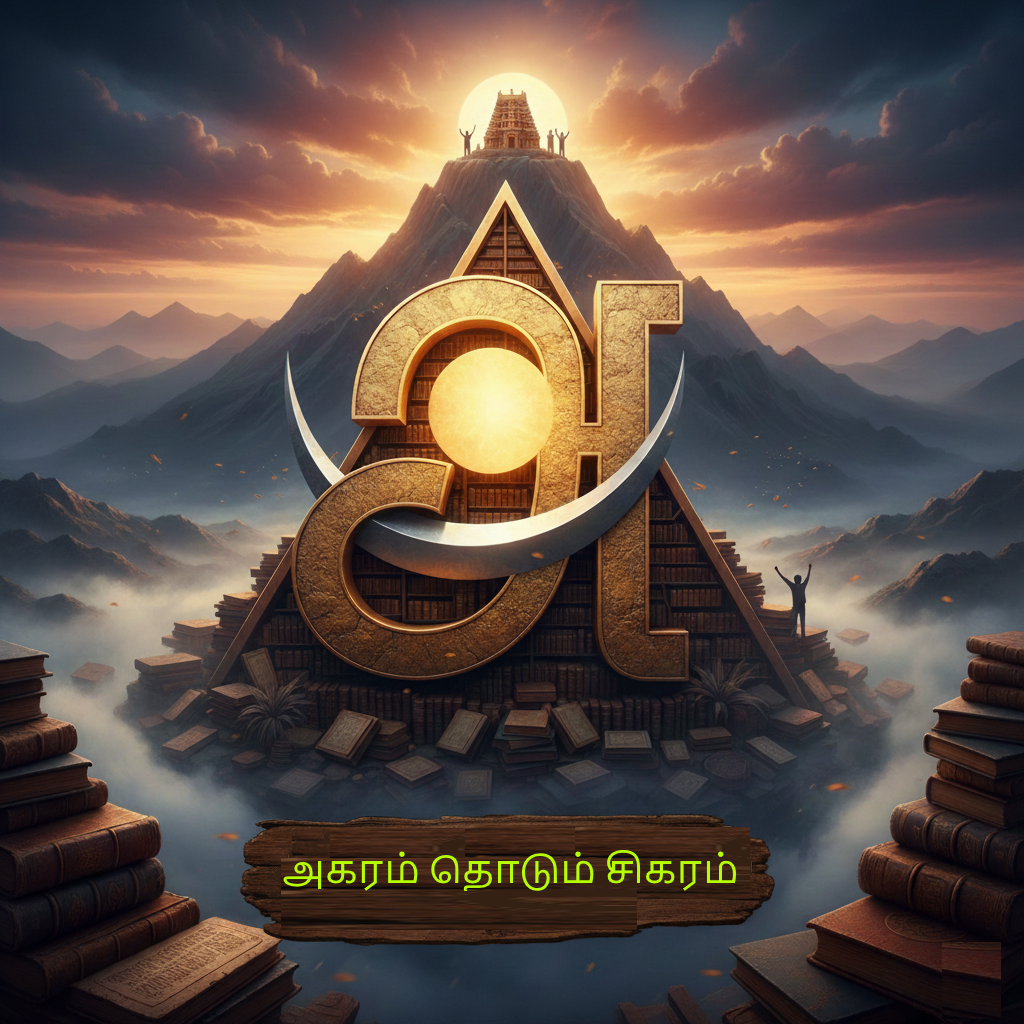
தமிழ் மொழி வெறும் கவிதைக்கான மொழி மட்டுமல்ல; அது அறிவியலும், கணிதமும், இயற்கையும் இணைந்த ஒரு பேரதிசயம். குறிப்பாக, அதன் முதல் எழுத்தான ‘அ’ என்பது உலக மொழிகள் அனைத்திற்கும் ஒரு ‘மூலதனம்’ (Base Capital) போன்றது. அதன் சிறப்புகளை இங்கே விரிவாகக் காண்போம்.
1. இயற்கையின் முதல் ஒலி (The Primordial Sound)
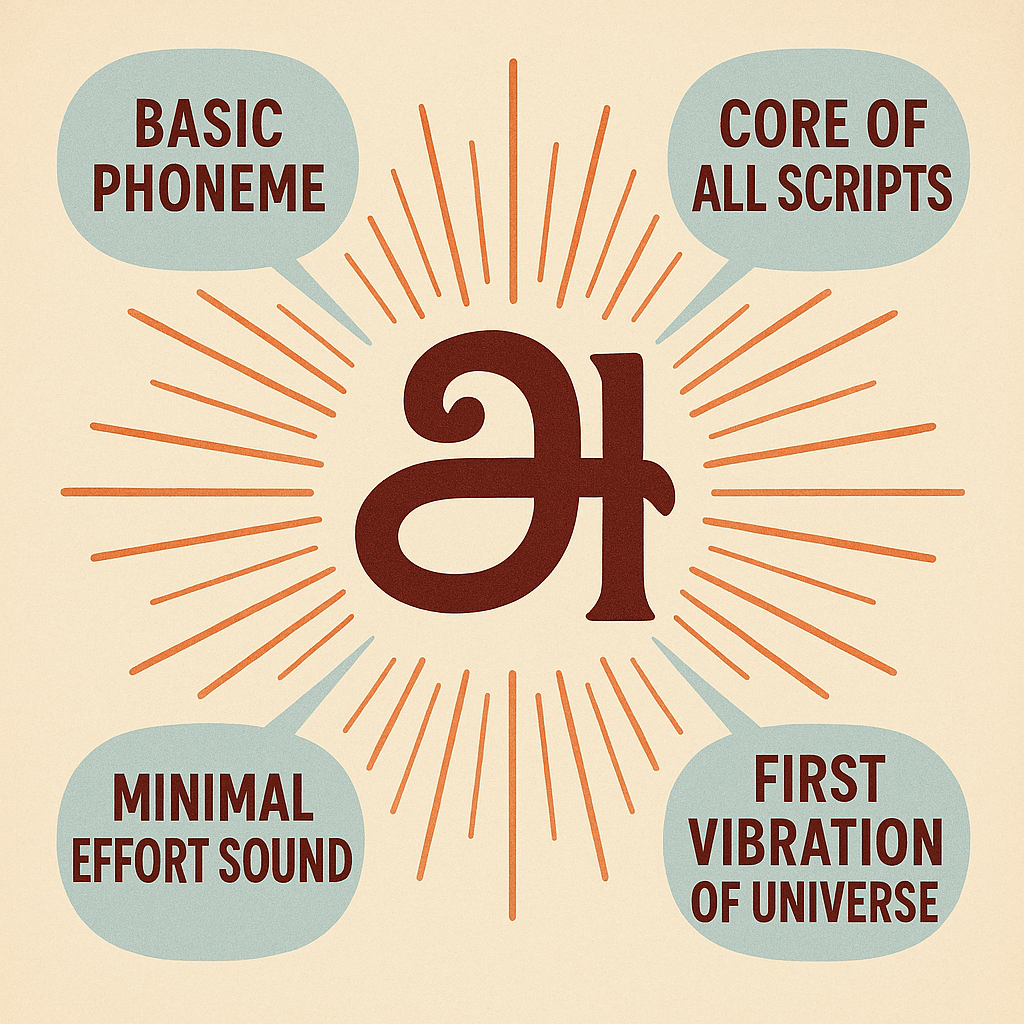
மனிதன் தன் வாழ்நாளில் எழுப்பும் முதல் ஒலி ‘அ’. இதழ்களைத் திறந்தாலே (அங்காத்தல்) எவ்வித தடையுமின்றி வெளிப்படும் இந்த ஒலி, ஒரு குழந்தையின் முதல் அழுகையிலும், வியப்பின் உச்சத்திலும் தானாகவே பிறக்கிறது. அதனால்தான் திருவள்ளுவர் உலகத்தின் இயக்கத்தை “அகர முதல…” என்று இந்த ஒலியிலிருந்தே தொடங்கினார்.
Title: The Universe Speaks Tamil: Decoding Creation, Atom by Atom, in the First Kural
Introduction:
What if the wisdom of ancient sages held the blueprint for modern physics? What if the very first sentence ever written in one of the world’s oldest languages wasn’t just a philosophical statement, but a cosmic equation? Prepare to embark on a journey that merges linguistics with quantum mechanics, spirituality with subatomic particles, as we unpack the mind-bending depths of the very first Kural from Thirukkural:
Meaning: “Just as the letter ‘A’ is the beginning of all alphabets, the Eternal God (Aadhi Bagavan) is the beginning of the entire world.”
At first glance, it’s a beautiful, spiritual affirmation. But as we’ll discover, Thiruvalluvar, the author of Thirukkural, was a quantum physicist, a biologist, and a cosmologist, all rolled into one, subtly encoding the very fabric of existence into his words.
1. The “Big Bang” of Sound: Why ‘அ’ (A) is the Universal Constant
Imagine the purest sound possible. No tongue touching teeth, no lips meeting, just a simple opening of the mouth. That’s ‘அ’ (A). In Tamil, this is Angandhu Koorthal – the effortless emission of sound. Linguistically, ‘அ’ is the base from which all other sounds are formed, the phonetic “capital” of language.
But what if ‘அ’ isn’t just the beginning of our alphabet, but the beginning of everything?
2. The Cosmic Dance: Father, Mother, and the Birth of a Letter (and a Universe!)
In Tamil grammar, letters are more than symbols; they’re a family.
Uyir Ezhuthu (உயிர் எழுத்து – Life Letters/Vowels): Representing the masculine, the breath, the soul, the Father.
Mei Ezhuthu (மெய் எழுத்து – Body Letters/Consonants): Representing the feminine, the form, the matter, the Mother.
Uyir-Mei Ezhuthu (உயிர்மெய் எழுத்து – Life-Body Letters): The union of a vowel and a consonant, forming the child – a living, sounding letter.
Consider the science: A human body (Mei) comes from the mother, and the spark of life (Uyir) from the father. This isn’t just poetry; it’s ancient genetics!
Extending this to Kural 1:
Aadhi (ஆதி): The Primordial Mother, representing Sakthi (Energy/Matter), the physical blueprint of the universe.
Bagavan (பகவன்): The Eternal Father, representing Sivam (Consciousness/Spirit), the life-giving force.
Just as a consonant (க்) only comes alive when a vowel (அ) joins it to become a living letter (க), the universe (உலகு) only manifests when Aadhi and Bagavan unite. This is the Ardhanarishvara concept – the inseparable half-male, half-female deity, signifying that consciousness and matter are two sides of the same coin. “Sivam illaiyel Sakthi illai; Sakthi illaiyel Sivam illai.”
“Why Every Letter is a Miracle”
In many languages, letters are just arbitrary symbols. But in Tamil, every letter is a biological lesson. Look at the letter க (Ka). It doesn’t exist in a vacuum. It is the child of two parents. Its body comes from the consonant க் (Mei) and its life-voice comes from the vowel அ (Uyir).
This is why Thiruvalluvar uses the term Aadhi Bagavan. He is reminding us that we, and everything in the ‘Ulagu’ (World), are “Uyirmei” characters—living unions of the physical and the spiritual. If you take away the soul, the body becomes a silent point (the dot over the consonant). If you take away the body, the soul has no way to be heard.
3. The Microcosm of the Atom: Quarks, Bosons, and Deities
Our ancient texts visualize the subatomic world. Your framework, seen at Harivulagam.com, brilliantly maps these concepts:
Brahman (Quantum Field): The unmanifest potential, the “Swarupa” state of God.
Brahma (Higgs Boson): The “Mass-Giver,” shaping form from the field.
Siva (Neutron) & Vishnu (Proton): The core of the atom.
Ayyappa (Strong Nuclear Force): Born of Siva and Vishnu, he binds the nucleus – without him, matter disintegrates.
Sakthi (Electron): The orbiting energy; its flow generates Vinayaga (Magnetic Force).
Murugan (6 Quarks): With his six heads (Shanmuga), he represents the six flavors of quarks (up, down, charm, strange, top, bottom). His consorts, Valli & Deivanai, are the Wave-Particle Duality – the flowing energy and the structured particle.
Narada (Bosons/Photons): The divine messenger, the “force carrier” that allows particles to communicate and interact, linking the three states of consciousness (waking, dream, deep sleep).
Every ‘letter’ (Ezhuthu) in this Kural isn’t just a character; it’s a subatomic particle, a force, a fundamental building block of the universe.
4. The Five Stages of Creation: From Silence to “Thamizhthal” (Perfection)
The journey from the unmanifest to the manifest is a five-stage process, mirrored in the creation of sound and the universe itself. This is the inner secret of why our language is called “Thamizh”:
அமிழ்தல் (Amizhdhal – Immersion):Space (Akash). The ‘A’ is immersed in silence, like a seed holding potential. (Para Vani – The transcendent sound).
இமிழ்தல் (Imizhdhal – Humming):Air (Vayu). The first subtle vibration, a hum, a stir of energy. (Pashyanti Vani – The intuitive thought).
உமிழ்தல் (Umizhdhal – Emission):Fire (Agni). The expulsion of breath, the ignition of sound. (Madhyama Vani – The inner monologue).
குமிழ்தல் (Kumizhdhal – Bubbling):Water (Appu). The sound gathers form in the mouth, like a bubble on the surface. (Vaikhari Vani begins to form).
தமிழ்தல் (Thamizhthal – Perfecting):Earth (Prithvi). The final, articulated, and sweet sound. The “A” is fully manifest and understood. This is why the language is named Thamizh – the “Perfected Sound,” the most refined manifestation of vocal energy.
This five-stage process applies directly to the Pancha Boothas (Five Elements): from the formless expanse of Space (Amizhdhal) to the dense, tangible Earth (Thamizhthal), the universe itself undergoes this “sweetening” of creation.
Conclusion: The Universe is a Self-Writing Poem
Thiruvalluvar’s first Kural isn’t just a religious or philosophical verse. It’s a grand unification theory, presented as poetry. It tells us that:
The “Agara” (A) is the “Big Bang” – the first vibration that brings the universe into being.
The “Ezhuththellam” (all letters) are the subatomic particles, forces, and elements – the code of existence.
“Aadhi Bagavan” is the Cosmic Male-Female principle, the Quantum Field from which everything originates.
The “Ulagu” (World) is the final, manifested masterpiece – the most “Thamizhthal” (perfected) state of cosmic energy.
To understand this Kural is to grasp that the laws governing how we speak are the very same laws governing the birth of stars and the dance of electrons. It transforms our understanding of language, science, and spirituality into a single, elegant truth.
So, the next time you hear or speak ‘அ’, remember: you’re not just uttering a sound; you’re echoing the very first vibration of the universe.
Call to Action for Harivulagam Readers: What other Kurals do you think hold hidden scientific or cosmic secrets? Share your thoughts in the comments below! Let’s continue to unlock the ancient wisdom embedded in our language.
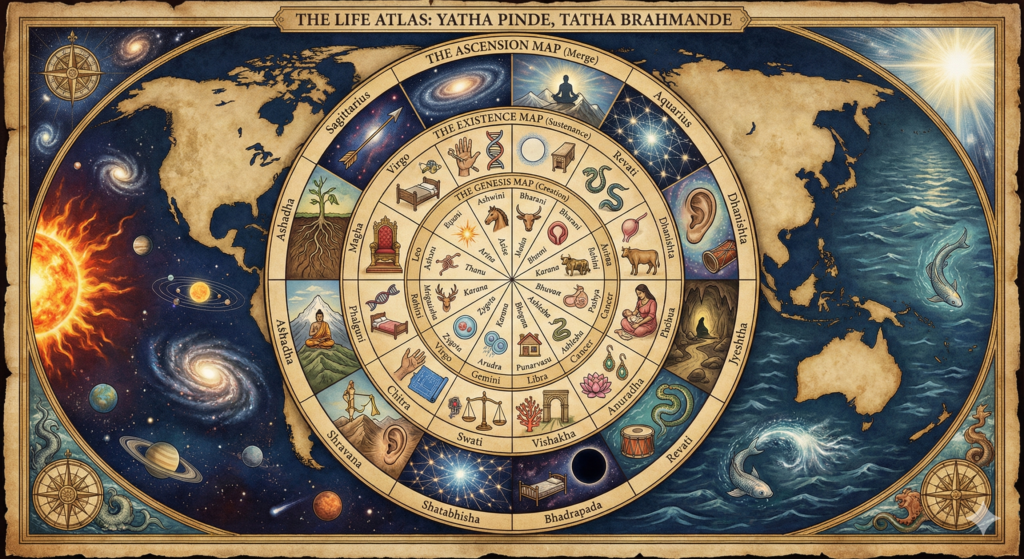
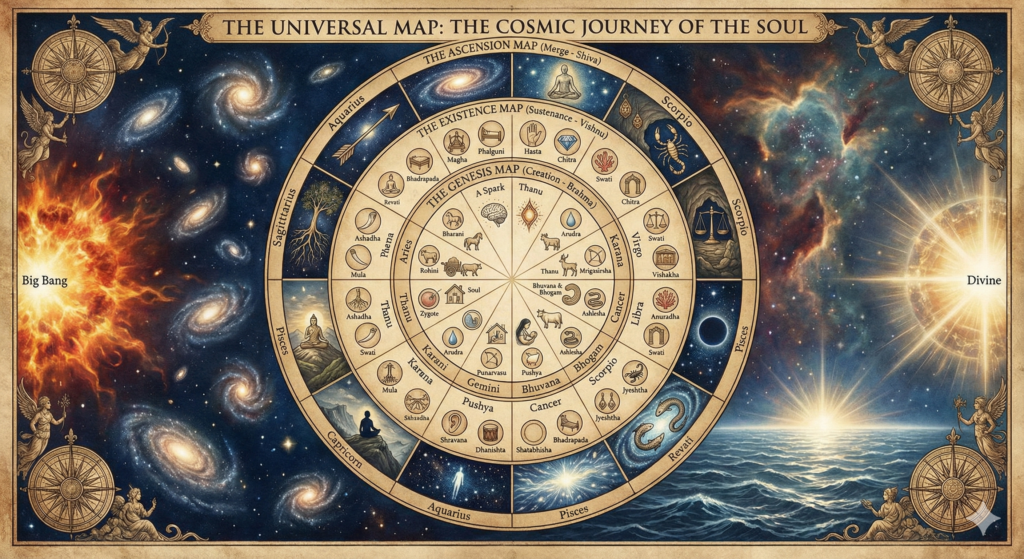
From the Spark of the Father to the Breath of the Infant.
This section maps the journey from the first intention of life to the severing of the umbilical cord. It describes how the Universe (Macro) builds the Body (Micro).
A lifetime is not merely a biological event; it is a ritual. The twelve Rasis of the zodiac form a grand narrative map, guiding the soul through three distinct cycles of evolution: Creation (Brahma), Sustenance (Vishnu), and Merge (Shiva). This chapter decodes the mechanics of this journey.
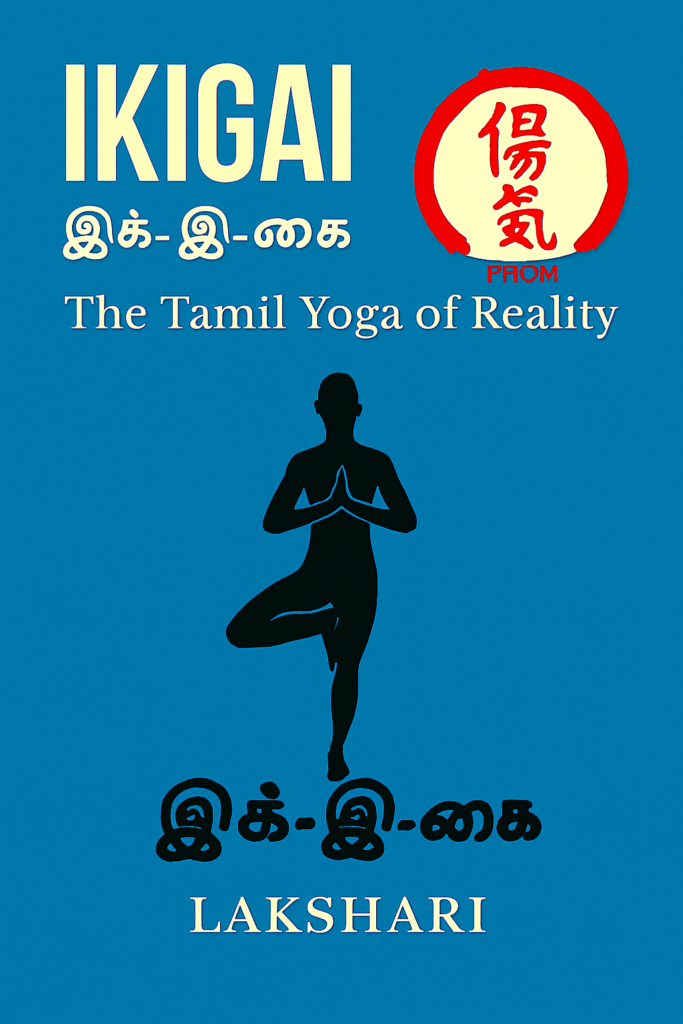
Beyond Purpose: The Science of Unifying (yoga) Time, Being, and Action
For decades, the world has looked to Japan for the secret to a long and meaningful life, captured in the word Ikigai (often translated as “a reason for being”).
However, a deeper look through the lens of ancient Tamil wisdom reveals that this concept is not just a philosophical idea—it is a precise linguistic code. The sound Ikigai is not a foreign noun to be found; it is a Tamil verb to be practiced.
Based on phonetic roots and Siddha philosophy, we now understand that Ikigai is not just a “reason” to live. It is a Yoga—a discipline of unification.
“Ennum Ezhuthum Kann Ena Thagum” — Numbers and Letters are fit to be called eyes.
We have all heard this famous aphorism by the great poetess Avvaiyar. Often, we interpret it simply: “Literacy and Numeracy are important for a job.” But is that all it means?
At Harivulagam, we believe ancient wisdom holds the codes to the universe. Let’s explore the profound logic behind Enn (Numbers) and Ezhuthu (Letters) and how they connect planetary motion to the thoughts in our own minds.
1. Enn: The Eye of the Universe (Logic & Law)
Why did our ancestors place such importance on Enn (Numbers)? It wasn’t just for counting coins.
The Chain of Logic: Numbers are the basis of Mensuration (Measurement). Measurement creates Mathematics. Mathematics is the language of Logic.
The Universal Connection: Where does Logic come from? It comes from observing Universal Law—specifically, the predictable, rhythmic movement of the planets.
The Insight: Just as the planets move in elliptical orbits governed by mathematical constants, our lives are governed by cause and effect. To see the “Truth” of the physical universe, we need the eye of Enn.
2. Ezhuthu: The Eye of Consciousness (Meaning & Form)
While numbers measure the world, Ezhuthu (Letters) defines it.
From Form to Name: When we observe nature, we see “forms.” Language gives these forms a “name.”
The Equation of Reality: In our tradition, an object isn’t real to us until we can name it and understand its purpose.
The Insight: Language is the software that translates our raw observations into communicable understanding.
3. The Digital Physics of Tamil
The link between Number and Letter is not accidental. In Tamil, they are fused together through Time.
Visible Sound:Ezhuthu is simply sound (Oli) frozen in a visible form.
Visible Thought:Enn is simply thought (Ennam) frozen in a visible quantity.
Maathirai (The Metric): Tamil grammar digitizes sound. The duration of every letter is measured in numbers called Maathirai (based on the blink of an eye or a finger snap).
Short vowel = 1 unit.
Long vowel = 2 units.
Consonant = ½ unit.This proves that our language is built on the musical mathematics of nature.
4. The Lesson for the Next Generation: The “Action Engine”
How do we apply this high-level philosophy to our children? We must teach them that Thinking is a Skill.
Just as we observe the planets, we must observe our own minds. The cycle of human behavior works like this:
Observation -> Thought (Ennam) -> Feeling ->Action
The Trap: Most people let Observation jump straight to Action.
The Wisdom: We must teach kids to pause at the Thought stage.
Observation: A friend breaks a toy.
Thought: “He did it on purpose!” -> Action: Anger/Fighting.
Thought: “It was an accident.” -> Action: Forgiveness/Peace.
Conclusion
“Ennam Pol Vazhvu” — Your life is shaped by your thoughts.
Avvaiyar was right. We need two eyes to navigate existence:
Enn: To understand the Laws of the Outer World (Science).
Ezhuthu: To understand the Meaning of the Inner World (Consciousness).