


Wishing you and your family a very Happy Deepavali with quantum technology crackers from Harivulagam.
Wishing you and your family a very Happy Deepavali with quantum technology crackers from Harivulagam.
In the vast and diverse landscape of Hindu philosophy, the ultimate goal of human life is Moksha, liberation from the cycle of birth, death, and rebirth (Samsara) and the attainment of a state of absolute freedom, peace, and union with the divine. To achieve this profound state of being, ancient Hindu scriptures, particularly the Bhagavad Gita, outline four primary paths, or yogas: Bhakti Yoga (the path of devotion), Jnana Yoga (the path of knowledge), Karma Yoga (the path of selfless action), and Raja Yoga (the path of royal meditation).
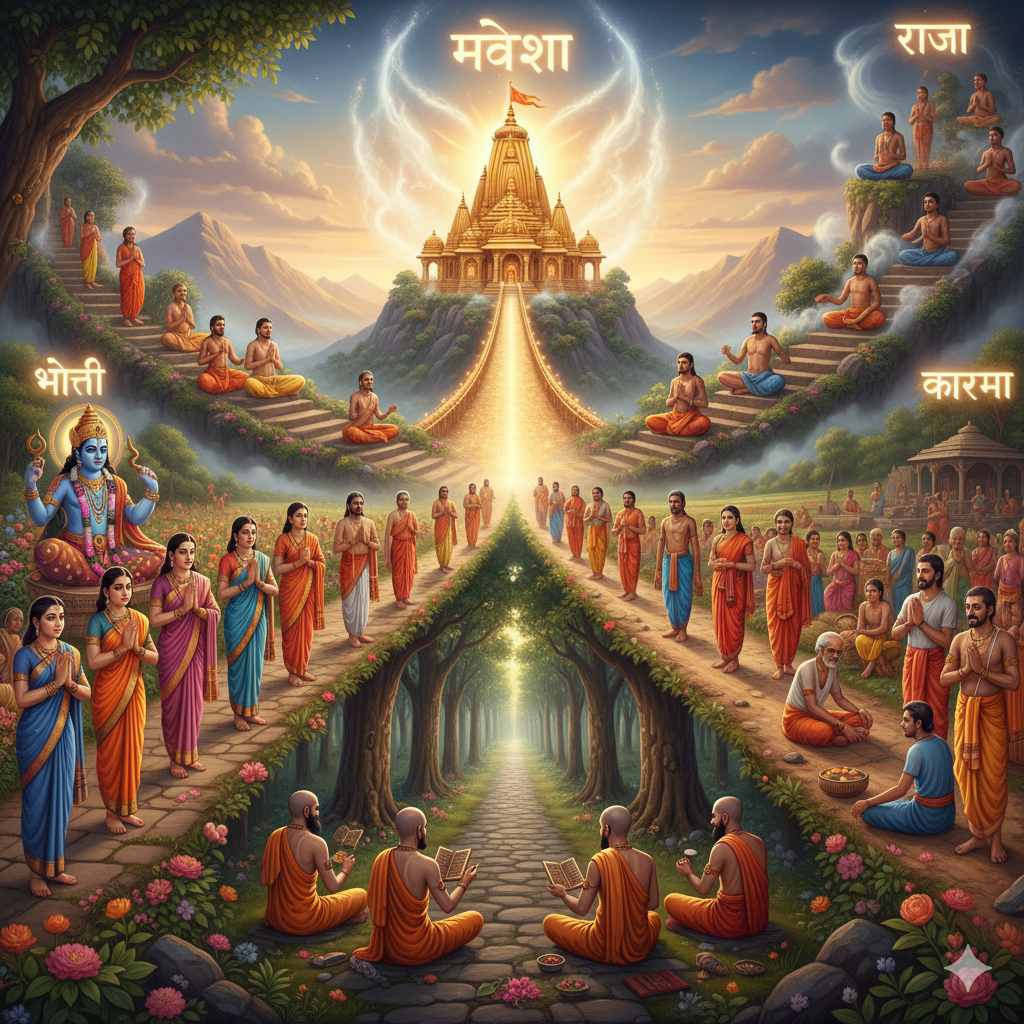
While these paths appear distinct in their approach and practices, they are ultimately understood to be different avenues leading to the same summit of spiritual realization. They cater to the varied temperaments and predispositions of individuals, offering a spiritual framework that is both personal and universal.
(more…)We begin with the fundamental building blocks of all matter.
A simple question about a word can sometimes unfold into a universe of meaning, revealing the deep philosophical currents that flow beneath the surface of language. What started as a query into the root of the Sanskrit word “Veda” blossomed into a fascinating exploration of two of India’s greatest classical languages: Sanskrit and Tamil. It was a journey that took us from the history of words to the very soul of grammar itself.
Our journey began with a beautiful, poetic idea: that the Sanskrit root for Veda, vid (to know), might be connected to the Tamil word viththu (விత్తు) or vidai (விதை), meaning “seed.” The analogy is profound—that true knowledge, like a seed, is potent and dense, requiring wisdom to understand its potential, unlike a fruit which is easy to identify.
What is the real purpose of education? Is it merely to fill our minds with facts and figures, or is there a deeper, more transformative goal? The wisdom of the Tamil language and its philosophical traditions offer a powerful answer through a beautiful analogy: the sculptor and the stone.
(more…)What could a Japanese manufacturing technique possibly have in common with the ancient Indian path of Yoga? One was designed to build efficient cars; the other, to build a peaceful mind. Yet, as we look deeper, we find they are two descriptions of the same universal journey: the path from chaos to order, from order to discipline, and from discipline to a state of blissful purpose.
This book explores the “8S Path,” a framework that begins with the practical Japanese 5S system and expands it with the profound wisdom of Patanjali’s Ashtanga Yoga. It is a guide to organizing not just your workspace, but your very life, leading to a healthier, happier existence where you can attain what is truly expected.
(more…)We often think of our home as a fixed point on a map, a simple address. But is it really that simple? A recent exploration of this idea revealed a profound truth: while the destination is singular, the journey home is infinite.
(more…)என்பவை அறவழியில் வாழ்வதற்கான அடிப்படைக் கோட்பாடுகள். இவை திருக்குறள் போன்ற அறநூல்களின் சாரம்சமாகவும், சாதாரணமாக நாம் அன்றாட வாழ்வில் கடைபிடிக்க வேண்டிய ஒழுக்க நெறிகளாகவும் இருக்கின்றன.
இதன் பொருள்:
(more…)“இந்திரன் முதலான தேவர்கள் அடையும் பதவிகள்” என்று முன்னர் நாம் விவாதித்தோம். பரிமேலழகர் இங்கு “இறைவர் பதங்கள்” என்று குறிப்பது, தேவர்கள், பிரம்மா, விஷ்ணு, சிவன் போன்றோர் அடையும் உயர்ந்த பதவிகளையும், உலகியல் இன்பங்களையும் உள்ளடக்கியது. இந்தப் பதவிகள் எவ்வளவு உயர்வானதாகக் கருதப்பட்டாலும், அவை நிலையற்றவை (அழியும் தன்மை கொண்டவை) என்பதை உணர்த்துகிறார்.
(more…)இந்திரன் முதலிய இறைவர் பதங்களும், அந்தம் இல் இன்பத்து அழிவு இல் வீடும் நெறி அறிந்து எய்துதற்கு உரிய மாந்தர்க்கு உறுதி என உயர்ந்தோரான் எடுக்கப்பட்ட பொருள் நான்கு. அவை அறம், பொருள், இன்பம், வீடு என்பன.