

The Hook: Why is the first letter of the Tamil alphabet (அ) shaped the way it is? Is it random, or is it a user manual for your mouth?
The Journey: Introduce the three fundamental building blocks of all typography (circle, arc, line) and show how அ masterfully integrates all three. Explain the physics of sound—how simply opening the mouth creates a 1-unit wave (அ), and holding it creates a 2-unit wave (ஆ).
The Cliffhanger: But letters aren’t just static shapes. The ancient grammarians claimed they possess biological genders—souls and bodies. How does a letter have a soul? Find out in the next step…
The Geometry of Speech — Is the Alphabet a User Manual for Your Mouth?
When we teach children to write, we treat the alphabet like a collection of random shapes. We tell them, “Draw a circle here, pull a line there, and that makes a sound.”
But what if the shapes of our letters aren’t random at all? What if the ancient architects of language didn’t invent characters, but rather mapped the physics of human speech onto geometry?
Let’s look at the absolute foundation of this cosmic code: the very first letter of the Tamil script, அ (A).
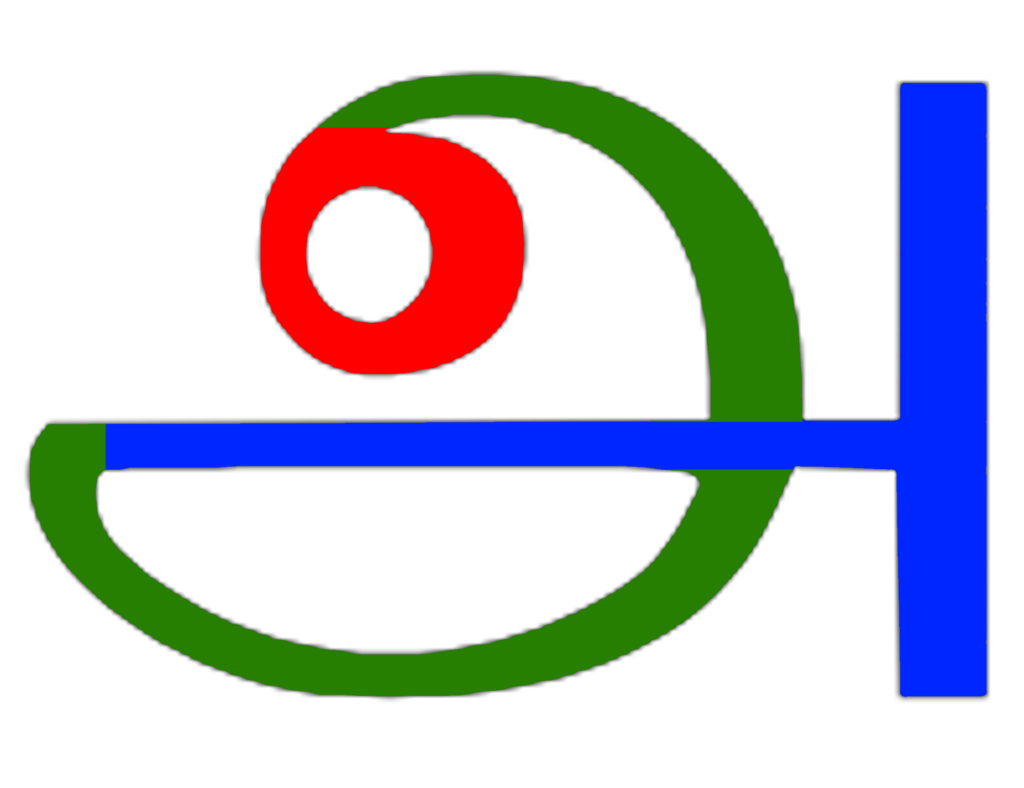
The Three Divine Shapes of Typography
If you look at every script across human history, almost every written symbol is built from just three geometric primitives:
- The Circle (Absolute potential)
- The Arc (Fluid movement)
- The Line (Structural grounding)
The genius of the Tamil alphabet is that it doesn’t ease you into these shapes. It forces your hand to master all three of them simultaneously in its very first letter, அ.
[ Circle: 𝁠 ] ──> [ Arc: ◟ ] ──> [ Horizontal & Vertical Lines: ┼ ]
     │                                               │
     └───────────── Forms the Letter: அ ─────────────┘
The letter begins with a tiny, perfect circle at the top left. From that anchor, the pen sweeps outward into a elegant, rolling arc, which instantly straightens into a sharp, structural horizontal line, finally anchored by a grounding vertical line.
By training a child’s muscle memory to write அ, you aren’t just teaching them one letter; you are handing them the geometric blueprint to write the entire language.
The Physics of a Single Breath
But the design goes deeper than ink on a palm leaf or paper. The physical shape of அ directly reflects the acoustic mechanics happening inside your body.
In Tamil grammar, vowel sounds are called உயிரெழுத்துக்கள் (Uyir-ezhuthukkal)—”Soul Letters.” They give life to speech.
To create the sound of அ, you don’t use your teeth, your tongue, or your lips. You simply open your mouth, release your vocal cords, and let the air flow naturally from the deepest part of your throat. It is the base frequency of human existence.
                  [ Mouth Fully Open ]
                           │
       அ (Short Vowel) ────┴────> ஆ (Long Vowel)
         (1 Māthirai)               (2 Māthirais)
The ancient grammarians even measured this sound using a unit of time called a மாத்திரை (Māthirai)—roughly the time it takes to snap your fingers or wink an eye.
- அ (A): Takes exactly 1 மாத்திரை. A short, concise burst of life.
- ஆ (Aa): Take that exact same mouth position, but hold the sound, extending the air for exactly 2 மாத்திரைகள்.
By simply holding the breath longer, the geometry of the letter physically shifts. அ opens its loop at the bottom right, trailing out to form ஆ, visually showing that the sound has been extended through time.
The Cliffhanger: A Biological Secret Hidden in Plain Sight
We treat alphabets as tools for writing shopping lists or emails. But to the ancients, language was a living, breathing reflection of nature itself.
The vowels (அ, ஆ, இ, ஈ…) are the independent, masculine souls (உயிர்). But a soul cannot manifest in the physical world without a vessel. It needs a body. In Tamil, the consonants are called மெய்யெழுத்துக்கள் (Mei-ezhuthukkal)—”Body Letters.”
What happens when the soul enters the body? A biological fusion takes place that perfectly mirrors how human life itself is conceived.
How does the alphabet predict the laws of modern genetics? And what happens when a silent body letter suddenly catches a spark of life?
[Find out in the next step: The Biology of Language — When Soul Meets Body ──>]