

The fascinating connection you are referring to is a beautiful Sanskrit shloka (verse) written in praise of Lord Krishna (or sometimes interpreted as Lord Shiva). When decoded using the ancient Indian alphanumeric system called Katapayadi Samkhya (कटपय्यादि संख्या), it reveals the value of $\pi$ (Pi) accurate to 31 decimal places.
The Rules of Katapayadi Samkhya
The name Ka-Ta-Pa-Ya-di translates to “starting with Ka, Ta, Pa, and Ya”. It maps the letters of the Sanskrit alphabet to numbers from 1 to 9, and 0.
The primary guidelines are straightforward:
- Vowels standing alone represent zero ($0$).
- In a conjunct consonant (two consonants blended together), only the last consonant counts.
- A consonant without an associated vowel is ignored.
The letter groupings align as follows:
- Ka-adi group:
- Ta-adi group:
- Pa-adi group:
- Ya-adi group:
The Krishna Prayer (Shloka)
Here is the verse in Devanagari script:
गोपीभाग्य मधुव्रात: शृङ्गिशोदधि सन्धिग।
खलजीवितखाताव गलहाला रसंधर॥
The Literary Meaning:”O Lord Krishna, anointed with the yogurt of the milkmaids’ worship, O savior of the fallen, O master of Shiva, please protect me.”Decoding the Value of Pi (\pi)If we break down each syllable according to the Katapayadi rules, a string of digits naturally emerges:
| Syllable | Code | Syllable | Code | Syllable | Code | Syllable | Code |
|---|---|---|---|---|---|---|---|
| गो (go) | 3 | शृं (śru) | 5 | ख (kha) | 2 | ग (ga) | 3 |
| पी (pī) | 1 | गि (gi) | 3 | ल (la) | 3 | ल (la) | 3 |
| भा (bhā) | 4 | शो (śo) | 5 | जी (jī) | 8 | हा (hā) | 8 |
| ग्य (gya) | 1 | द (da) | 8 | वि (vi) | 4 | ला (lā) | 3 |
| म (ma) | 5 | धि (dhi) | 9 | त (ta) | 6 | र (ra) | 2 |
| धु (dhu) | 9 | स (sa) | 7 | खा (khā) | 2 | सं (saṃ) | 7 |
| व्रा (vrā) | 2 | न्धि (ndhi) | 9 | ता (tā) | 6 | ध (dha) | 9 |
| त (ta) | 6 | ग (ga) | 3 | व (va) | 4 | र (ra) | 2 |
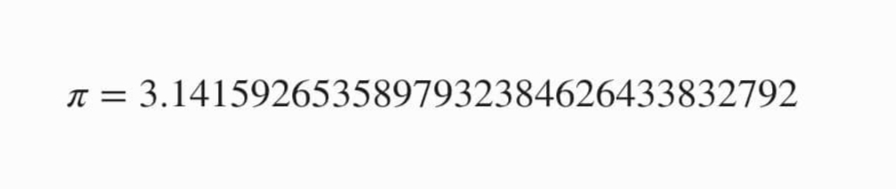
Putting all those numbers together gives you the exact sequence:
A Quick Historical Note
While this system is authentically ancient (frequently used in mathematical and astronomical treatises from Kerala to memorize lengthy figures), this specific Krishna shloka was popularized in the 20th century by Swami Bharati Krishna Tirtha in his famous book Vedic Mathematics. It serves as a beautiful demonstration of how historical scholars cleverly embedded dense mathematical information into poetic, easy-to-recite verse.